The AI Capability Gap: Why Most Organizations Are Missing the Potential
This post is inspired by the episode, The AI capabilities overhang of the AI Daily Brief. Here’s how it connects to Superintelligent:
- Capability Overhang: Closing the capability overhang starts with understanding where the gap is widest in your organization. That's what structured discovery surfaces, not guesses about where AI might help, but evidence about where it will.
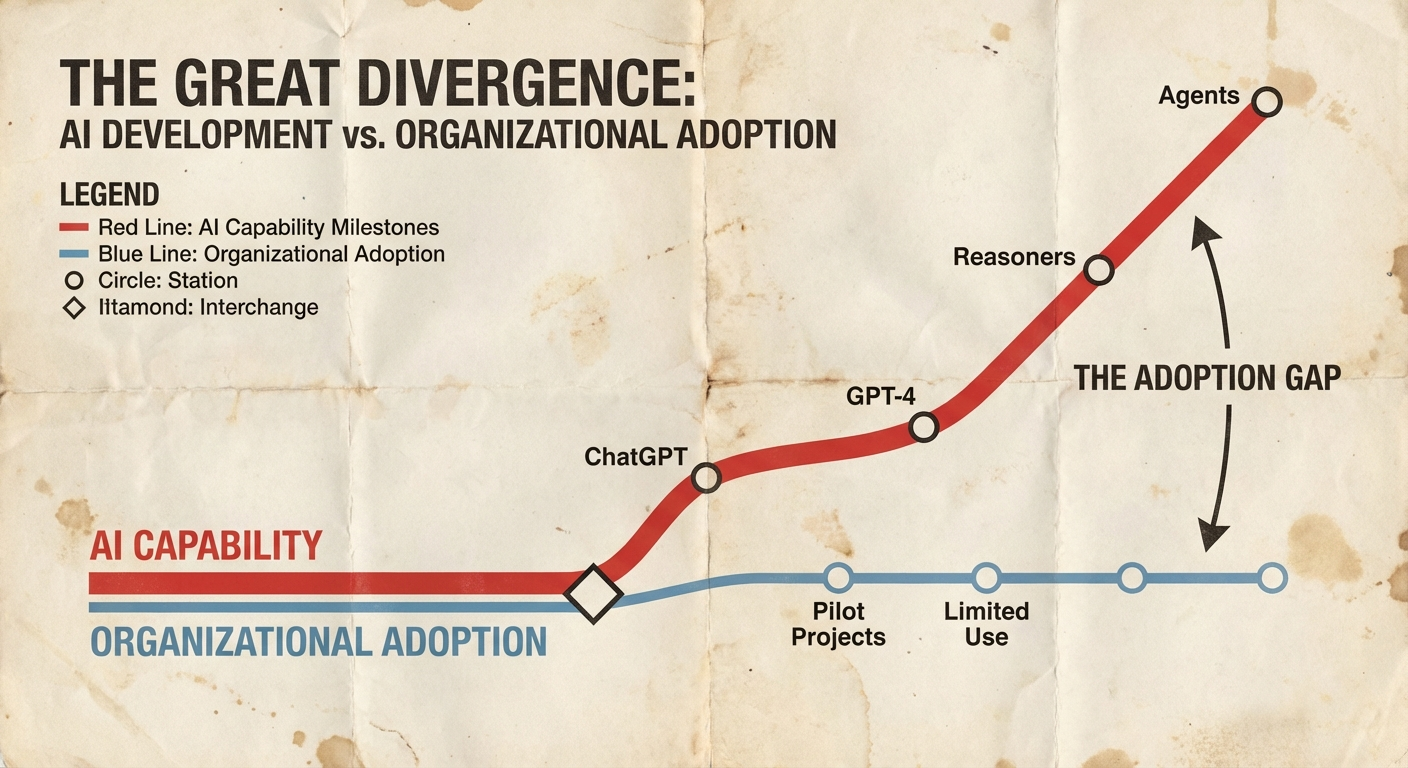
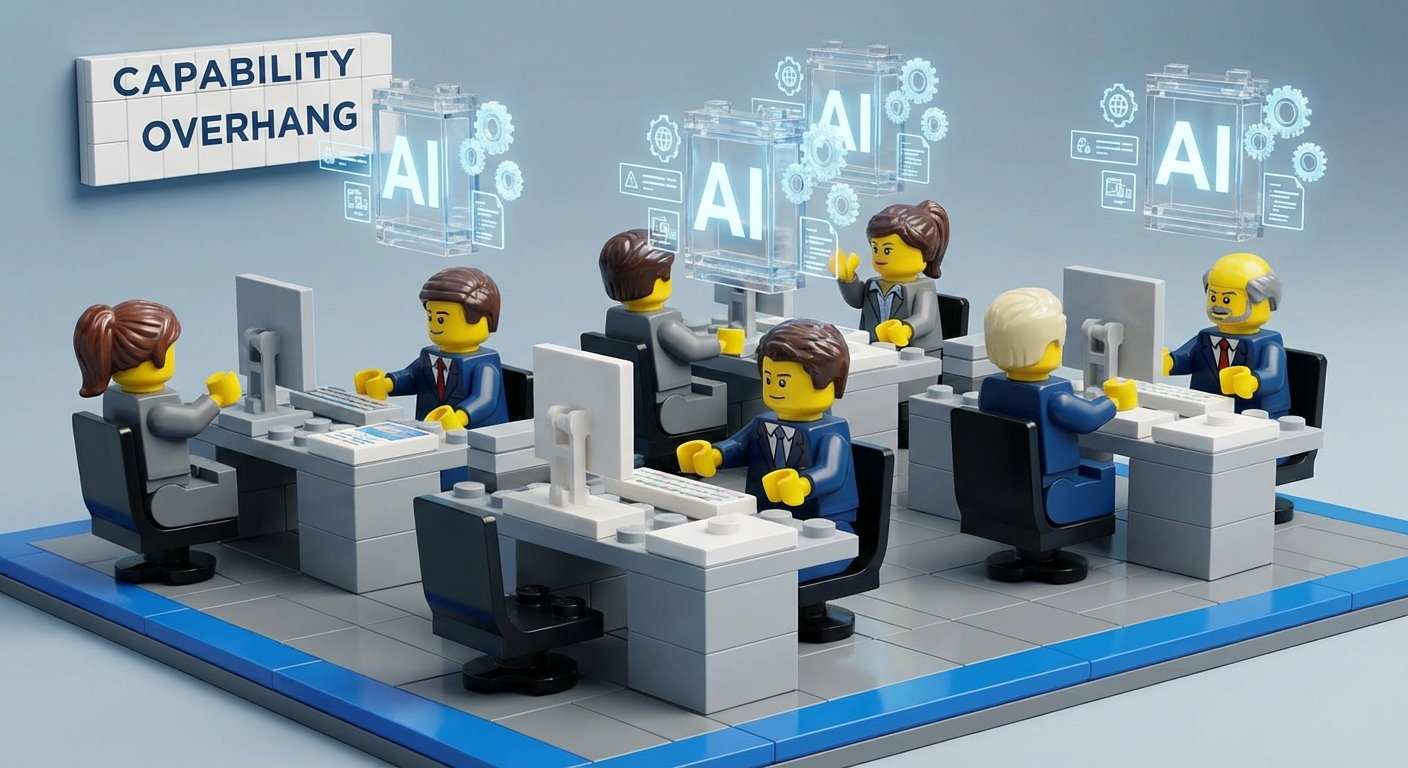
There's a term floating around Silicon Valley that perfectly captures what's happening in enterprise AI right now: the capability overhang. It's the gap between what AI can actually do today and what most organizations are capturing from it. And for the vast majority of businesses, that gap is enormous.
OpenAI's leadership has been talking about this concept more frequently, and for good reason. The models have gotten incredibly capable, but adoption is lagging far behind potential. The result? Organizations are sitting on untapped productivity gains, cost savings, and competitive advantages that they don't even know exist.
The Disconnect Between Potential and Reality
Here's what's fascinating about the current moment: we're not waiting for better AI. The technology exists today to automate significant portions of knowledge work, streamline complex processes, and unlock insights buried in organizational data. The bottleneck isn't the models, it's organizational readiness.
Most enterprises are stuck in what researchers call the "we don't have time to learn the thing that could save us so much time" paradox. Teams are too busy with manual processes to step back and understand how AI could eliminate those same processes.
This creates a vicious cycle. Organizations dabble with AI tools at the edges, maybe some teams try ChatGPT for writing tasks or experiment with a document analysis tool, but they never achieve the systematic transformation that would justify serious investment or attention from senior leadership.
The Three Types of Capability Overhang
Not all capability gaps are created equal. Based on patterns emerging across different industries and organization types, there are three distinct categories of overhang that create different challenges and opportunities:
The Awareness Gap
This is the most basic form of capability overhang: organizations simply don't know what's possible. Leadership might understand that AI is transformative in general terms, but they lack specific knowledge about applications relevant to their industry or business model.
The Access Gap
These organizations know what AI could do for them but can't figure out how to actually implement it. They might have tried a few tools, run some pilots, or hired consultants, but they haven't been able to bridge the gap between AI potential and operational reality.
The Execution Gap
The most frustrating form of capability overhang affects organizations that understand both what AI can do and how to implement it, but can't execute at scale. They might have successful pilots or pockets of AI adoption, but they can't systematically expand those successes across the organization.
The Path Forward
Closing the AI capability overhang starts with honest assessment: Where in your organization could AI provide significant value today, given current capabilities? What would need to change about existing processes to capture that value? Which barriers to implementation are technical versus organizational?
Organizations that can answer those questions clearly will find themselves positioned to act decisively when the right opportunities emerge. Those that can't will continue to watch the gap between potential and reality widen, even as the tools get better and the business case becomes more obvious.
The capability overhang is real, and it's significant. The organizations that close it first will determine competitive dynamics for years to come.
Based on insights from recent AI adoption research and organizational readiness patterns identified in the AI Daily Brief podcast.
This post is based on The AI capabilities overhang from AI Daily Brief.