The New CEO Mandate: Why AI Strategy Can't Be Delegated Anymore

This post is inspired by the episode, Why CEOs need to lead AI strategy of the AI Daily Brief. Here’s how it connects to Superintelligent:
- CEO Mandate: When CEOs take the lead on AI, they need a structured way to understand what's actually happening across the organization, not just what their direct reports are telling them. That's the gap our platform fills.
- Infrastructure Gap: Organizational infrastructure gaps, data silos, unclear workflows, misaligned teams, are exactly what surface during structured assessments. You can't build the infrastructure if you don't know where the gaps are.
The game has changed. What started as experimental AI pilots in IT departments has escalated into something that demands attention at the highest levels of enterprise leadership. New data reveals that 72% of CEOs now consider themselves the primary decision-maker on AI initiatives in their organization. Half of them believe their job stability depends on getting it right.
This isn't just another technology adoption cycle. CEOs are stepping up because they recognize that AI represents a fundamental shift in how business gets done. The stakes are too high and the implications too broad for this to be handled by anyone other than the person with ultimate accountability for the organization's future.
The CEO Reality Check
The numbers tell a stark story. According to the latest KPMG quarterly pulse survey of leaders at organizations with $1+ billion in revenue, the responsibility for AI strategy has moved decisively to the C-suite. This represents a massive shift from just 18 months ago when AI was still largely viewed as a technical implementation challenge.
What's driving this change? Three key factors emerge from the data:
Executive accountability pressure: When 50% of CEOs believe their job security is tied to AI success, delegation becomes impossible. The board isn't asking the CTO about AI strategy, they're asking the CEO.
Cross-functional impact: AI touches every department, every process, every customer interaction. Only someone with enterprise-wide authority can orchestrate changes of this magnitude.
Speed requirements: The timeline for AI ROI has compressed dramatically. Two-thirds of CEOs now expect returns within 1-3 years, down from the 3-5 year expectations that dominated last year. That acceleration demands top-level prioritization.
The Infrastructure Crisis Nobody Talks About
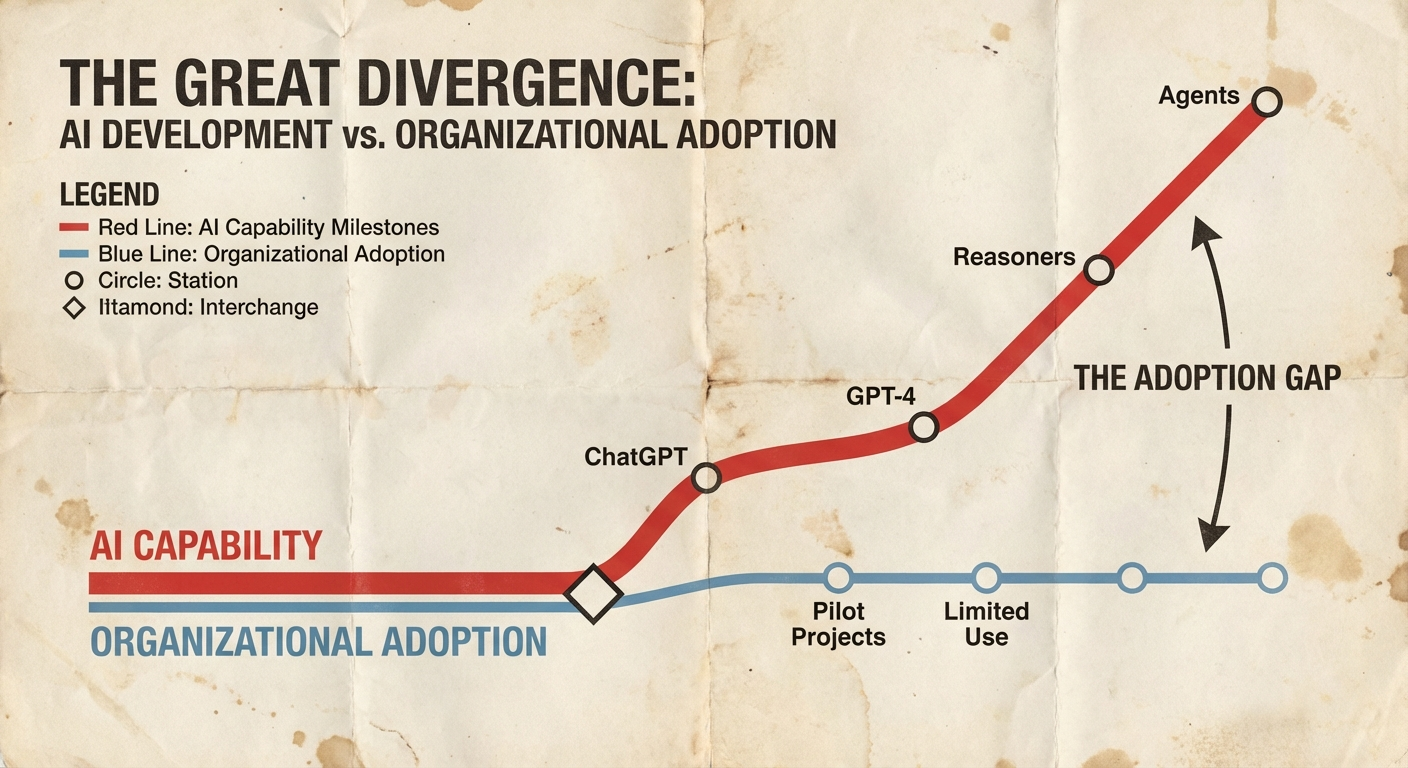
Here's the part that's getting missed in all the excitement about AI capabilities: 41% of organizations now cite lack of organizational infrastructure as their top barrier to deploying AI agents. That number has tripled in just two quarters.
This isn't a technology problem, it's an organizational one. The models work. The platforms exist. The bottleneck is in the messy reality of how enterprises actually operate.
When we talk about organizational infrastructure gaps, we're talking about:
- Data silos that prevent AI systems from accessing the information they need
- Workflow disconnects where different departments operate with incompatible processes
- Decision rights confusion where nobody knows who has authority to approve AI implementations
- Skills gaps where teams lack the knowledge to work effectively with AI tools
- Change management failures where AI initiatives stall because people don't understand how to adapt
The CEO mandate makes perfect sense when you realize that these aren't technical problems that can be solved with better code. They're structural problems that require executive authority to fix.
The Assessment Imperative
When CEOs take direct responsibility for AI strategy, they need visibility into what's actually happening across the organization. Not what their direct reports tell them is happening, what's actually happening.
This is where most AI initiatives go wrong. Leadership gets excited about the potential, approves budget for tools and platforms, then discovers six months later that adoption is spotty, results are underwhelming, and teams are frustrated.
The missing piece is structured assessment of organizational readiness. Before you can deploy AI effectively, you need to understand where your data infrastructure has gaps, which processes are ready for AI augmentation, how your teams actually work today, and where resistance is likely to emerge.
The ROI Timeline Compression
The pressure on CEOs isn't just about whether AI will work, it's about how fast it will work. The expectation shift from 3-5 year payback periods to 1-3 years (with 20% now expecting results within a year) changes everything about how AI initiatives need to be structured.
When CEOs have 12-24 months to show AI ROI instead of 36-60 months, the margin for error shrinks dramatically. There's no time for false starts or learning through trial and error.
The Bottom Line
AI isn't just another technology implementation. It's a fundamental shift in how business gets done, requiring leadership that can only come from the top of the organization.
The CEOs who recognize this earliest and take direct responsibility for AI strategy will build sustainable competitive advantages. Those who continue to delegate will find themselves playing catch-up in a game where the rules are changing faster than their organizational processes can adapt.
The question isn't whether your organization will adopt AI, it's whether you'll lead the transformation or have it happen to you.
Based on insights from the latest KPMG Quarterly Pulse Survey on AI in enterprise and organizational readiness research from the AI Daily Brief podcast.
This post is based on Why CEOs need to lead AI strategy from AI Daily Brief.