How AI Starts Doing the Work in 2026 With Anthropic CPO Mike Krieger
This post is inspired by the episode, How AI Starts Doing the Work in 2026 With Anthropic CPO Mike Krieger of the AI Daily Brief. Here’s how it connects to Superintelligent:
- Enterprise Execution Gap: That gap between excitement and execution is exactly what we help companies close. SI's discovery process identifies which use cases will actually move the needle before resources get committed.
- From Sprinkles to Strategy: Defining those clean task boundaries is the hard part, and it's what SI's platform does at scale. We help teams identify which functions are ready for delegation and which need more groundwork.
Mike Krieger, Anthropic's Chief Product Officer, spent the better part of 2025 watching enterprises discover what he'd known for months: half-finished AI outputs create more work than they save. That observation, delivered in December on AI Daily Brief, cuts to the core problem most organizations face in 2026.
The pilots are done. The enthusiasm is real. But most deployments are stuck at the "sprinkle AI on surfaces and hope" stage. And hope, as Krieger makes clear, is not a strategy for production AI.
The Capability Gap Nobody Talks About
Here's the uncomfortable truth: your employees know AI can write code, draft emails, and build dashboards. They just don't trust it to finish the job.
Krieger frames this as the "half-done problem." Enterprises roll out Claude or ChatGPT enterprise-wide. Employees try it once or twice, get something 60% complete, then abandon it because fixing the mistakes takes longer than doing it themselves. That MIT productivity study that showed mixed results wasn't methodologically perfect, but it pointed at something real. People aren't seeing the time savings they expected.
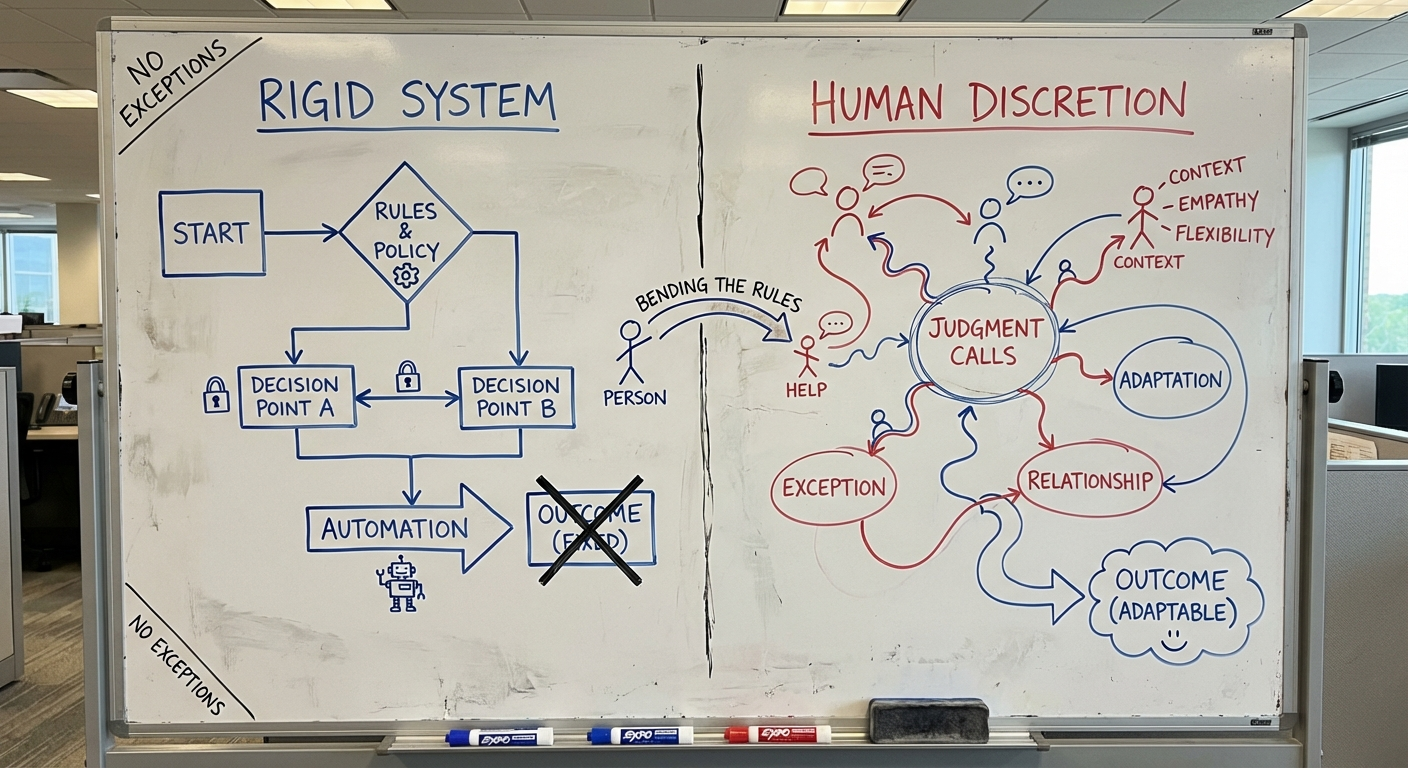
The gap isn't in the model's raw capability anymore. It's in how organizations deploy it. If you hand someone a tool without context, without workflows designed around its strengths, without clear guidance on what "good enough" looks like, you get adoption theater. People use it to look busy, not to get work done.
This maps directly to what we see at Superintelligent in every readiness audit. Two-thirds of the report isn't about identifying use cases. It's about cultural readiness, process design, and organizational infrastructure. Because the technology is ready. Most companies aren't.
From Sprinkles to Horizontal Agents
Krieger identifies the shift enterprises need to make in 2026: stop sprinkling AI features and start deploying horizontal agents for repeatable back-office work.
This is not the chatbot sidebar play. It's about taking those repetitive, bespoke processes that every enterprise has and actually delegating them. Know-your-customer reviews. Compliance reporting. Data enrichment workflows. Tasks that are too specific to outsource, too tedious to hire for, too rule-bound to just "figure out."
The difference between 2025 and 2026, according to Krieger, is that enterprises are finally asking the right question: not "can AI help with this," but "can we redesign this process so AI can own it."
That requires structured discovery. It requires mapping what those workflows actually look like today, where the friction points are, what "good enough" means in each context. It requires deciding which decisions the model can make autonomously and which need a human checkpoint.
Sound familiar? It should. It's the same process Superintelligent walks clients through. The difference is most companies try to figure this out themselves, burn six months on pilots that don't scale, then wonder why their competitors are moving faster.
The Infrastructure Year
2025 was the year of agent infrastructure. MCP became ubiquitous. OpenAI added skills support. Anthropic released Claude Code and the Agent SDK. The foundation is laid.
2026 is when enterprises actually build on it.
Krieger talks about working with a large bank that had to rethink not just data storage but data annotation and lineage to make AI useful. That's the kind of infrastructure work most organizations haven't even scoped yet. You can't just point Claude at your data lake and expect magic. You need semantic layers, retrieval systems, permission scaffolding.
This is not a one-quarter project. It's a multi-year transformation that starts with understanding what you actually have and what needs to change. Most CTOs are still mapping the terrain. The ones who started that work in 2024 are the ones who'll ship production agents in 2026.
The alternative is what Krieger calls being "harness-bound." You over-constrain the model because you don't trust it, so it can't deliver value. Then you conclude AI isn't ready. Meanwhile, your competitor loosened the harness six months ago and is already scaling.
The Middle Market Problem
Software engineers adopted Claude Code instantly. The hackathon projects Krieger describes were all using it as the underlying engine within weeks of release. That's the top of the adoption curve.
At the bottom, you have individual knowledge workers who don't know the "magic incantation words" to push past basic tasks. They hit a complexity ceiling and give up.
The middle is where enterprise value lives. Product managers, analysts, operations leads who are technical enough to understand what's possible but not engineers. They need structured onboarding, clear workflows, and products that guide them up the complexity ladder.
Krieger's example is telling: his wife, a PM and UX designer, was building a side project and filled the context window. She needed to move to semantic retrieval but didn't know the right prompt. Opus didn't suggest it. It took Krieger stepping in to say, "We need embeddings here."
That gap is where most enterprises are stuck. The model can do the work. The user doesn't know how to ask. And the interface doesn't bridge that gap automatically.
This is why readiness audits matter. You're not just identifying use cases. You're identifying who needs to use them, what their current skill level is, and what training or tooling they need to close the gap. You're designing the path from "chatbot tinkerer" to "power user" for the specific personas in your organization.
Delegation, Not Assistance
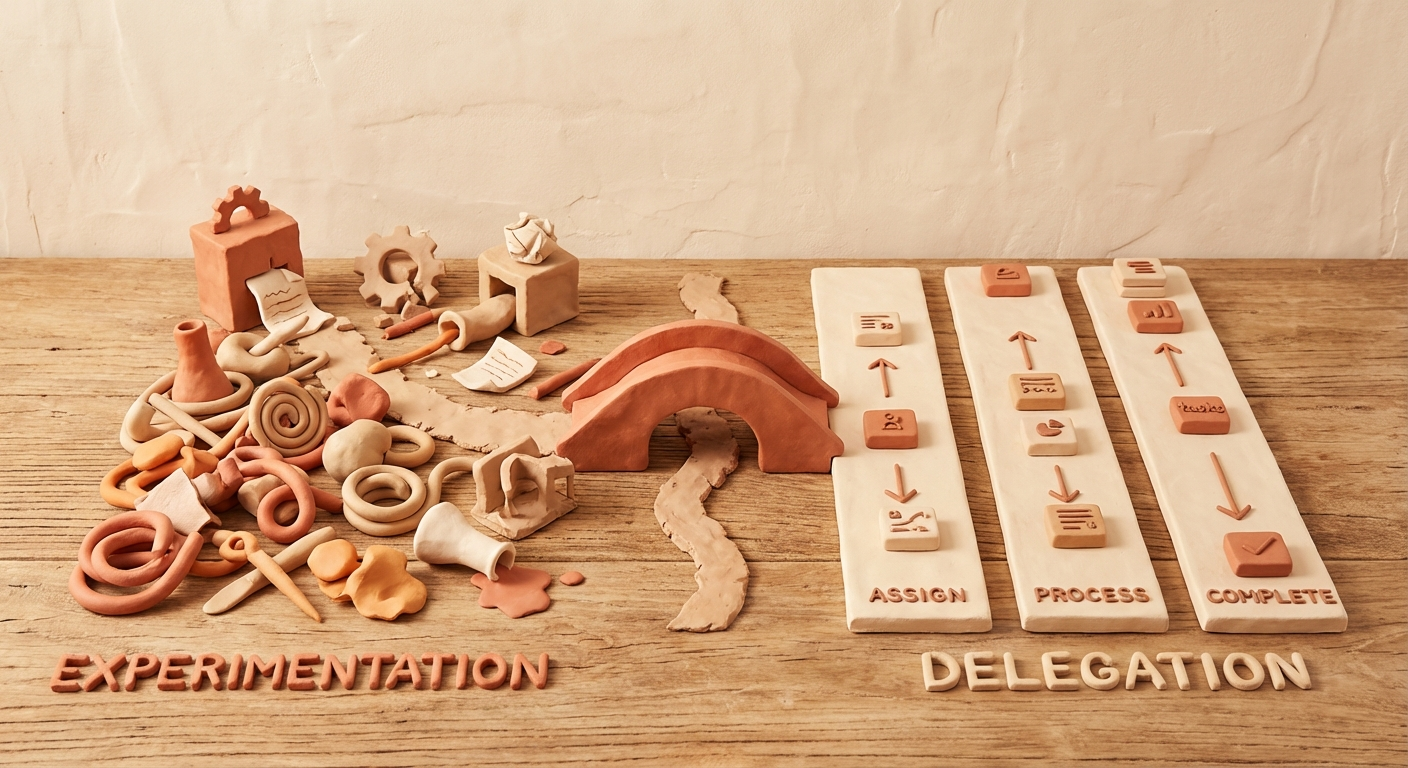
The clearest signal from Krieger's conversation is this: 2026 is the year AI moves from assistant to delegate.
Not fully autonomous. Not replacing jobs wholesale. But capable of owning scoped, repeatable work with human checkpoints.
"Reliably take work off your plate." That's how Krieger summarizes what AI needs to deliver in 2026. Not impress you with a clever response. Not generate a first draft you have to rewrite. Actually complete the task so you can move on.
That requires two things most enterprises don't have yet:
First, you need to decompose jobs into tasks the model can own. Not job functions. Tasks. Preparing the weekly compliance report. Enriching CRM data. Triaging support tickets. Clear inputs, clear success criteria, clear escalation paths.
Second, you need to design the handoff. What does "delegate to AI" look like in your organization? Is it tagging Claude in a GitHub PR? Scheduling an agent run in Slack? Queuing work in a system of record?
Most companies haven't even started this design work. They're still stuck at "can we use AI for this" instead of "how do we reorganize this workflow so AI owns the boring parts."
This is where the consultancies are going to get it wrong. They'll prescribe generic agent frameworks that worked at some other Fortune 500. But your processes are bespoke. Your constraints are unique. The handoff design has to match your culture and systems, or it won't stick.
This post is based on How AI Starts Doing the Work in 2026 With Anthropic CPO Mike Krieger from AI Daily Brief.